

- University
- Academic
- Schools/Vocational Schools
- Vocational School of Justice
- Vocational School
- Vocational School
- Department of Banking and Insurance (Turkish)
- Department of Computer Programming (Turkish)
- Department of Foreign Trade (Turkish)
- Department of Graphic Design (Turkish)
- Department of Interior Design (Turkish)
- Department of Construction Technology (Turkish)
- Department of Occupational Health and Safety (Turkish)
- Department of Media and Communication (Turkish)
- Department of Architectural Restoration (Turkish)
- Department of Radio and Tv Programming (Turkish)
- Department of Civil Aviation Cabin Services (Turkish)
- Department of Civil Aviation Transportation Management (Turkish)
- Department of Tourism and Hotel Management (Turkish)
- Department of Applied English Translation
- Vocational School Of Health Services
- Vocational School Of Health Services
- Department of Child Development (Turkish)
- Department of Physiotherapy (Turkish)
- Department of Paramedic (Turkish)
- Department of Opticianry (Turkish)
- Department of Medical Documentation and Secreteriat (Turkish)
- Department of Medical Imaging Techniques (Turkish)
- Department of Medical Laboratory Techniques (Turkish)
- Department of Elderly Care (Turkish)
- School of Applied Management Sciences
- School of Foreign Languages
- Faculties
- Faculty of Arts and Sciences
- Faculty of Fine Arts and Design
- Faculty of Law
- Faculty of Communication
- Faculty of Business
- Faculty of Engineering
- Faculty of Engineering
- Department of Computer Engineering
- Department of Biomedical Engineering
- Department of Electrical and Electronics Engineering
- Department of Industrial Engineering
- Department of Food Engineering
- Department of Genetics and Bioengineering
- Department of Aerospace Engineering
- Department of Civil Engineering
- Department of Mechanical Engineering
- Department of Mechatronics Engineering
- Department of Software Engineering
- Faculty of Health Sciences
- Medicine
- Graduate School
- Common Courses
- Schools/Vocational Schools
- Research
- Research Centers
- Library
- Smart Campus
- Technology Transfer Office
- İzmir Sciencepark
- Continuous Education Center (EKOSEM)
- Children's University
- Ethics Committee
- Teaching and Learning Center (EKOEĞİTİM)
- Psychology Application and Research Center
- Researcher Training Coordinatorship
- Research Collaborations And Innovation Coordinatorship
- Campus
- INTERNATIONAL
- Contact
- 25TH YEAR
FACULTY OF FINE ARTS AND DESIGN
Department of Visual Communication DesignMMD 304 | Course Introduction and Application Information
| Course Name |
Video Techniques and Production
|
|
Code
|
Semester
|
Theory
(hour/week) |
Application/Lab
(hour/week) |
Local Credits
|
ECTS
|
|
MMD 304
|
Fall/Spring
|
2
|
2
|
3
|
4
|
| Prerequisites |
None
|
|||||
| Course Language |
English
|
|||||
| Course Type |
Elective
|
|||||
| Course Level |
First Cycle
|
|||||
| Mode of Delivery | face to face | |||||
| Teaching Methods and Techniques of the Course | - | |||||
| National Occupation Classification | - | |||||
| Course Coordinator | - | |||||
| Course Lecturer(s) | ||||||
| Assistant(s) | - | |||||
| Course Objectives | The aim of the course is to move students from the position of viewer to that of maker, by teaching how a scene is constructed at both the level of analysis and the level of production. In the first half of the semester, students break down a scene from a film or series shot by shot, and through this work learn film language, mise-en-scène, performance and sound design. In the second half, students write their own scene, shoot it in the studio or with a mobile camera, edit it, and then transform it using AI-based image and video tools. The course positions current production technologies within the production chain without departing from the axis of a strong idea, strong dialogue and a strong concept. |
| Learning Outcomes |
The students who succeeded in this course;
|
| Course Description | The course is organised around a single object: the scene. The first half covers the fundamentals of film language — camera, mise-en-scène, performance and sound — and students present a detailed breakdown of a scene of their choice. In the second half, students develop a scene of their own, working sequentially through idea generation, screenwriting, storyboarding, production design, shooting, editing and sound. Character, location and prop designs are produced and locked with still-image generation models, and the recorded footage is then transformed against those designs using video-to-video models. In this way, traditional production discipline and current production tools are combined within a single workflow. |
| Related Sustainable Development Goals |
|
|
|
Core Courses | |
| Major Area Courses | ||
| Supportive Courses |
X
|
|
| Media and Management Skills Courses |
X
|
|
| Transferable Skill Courses |
X
|
WEEKLY SUBJECTS AND RELATED PREPARATION STUDIES
| Week | Subjects | Related Preparation |
| 1 | Introduction: course overview, basic production processes and the concept of the scene. Case studies of existing work with their production histories. | |
| 2 | Class profile and survey. "Everything is a remix": creativity, reference and transformation. Introduction to still-image generation and prompt anatomy. | Selection of three scenes the student finds compelling |
| 3 | Scene breakdown methodology. Film language I: shot sizes, camera angles, camera movement, coverage and the logic of the cut. | Image generation exercises |
| 4 | Film language II: mise-en-scène, location, lighting, colour, costume and props. Character design and consistency across shots. | Selection of the midterm scene |
| 5 | Film language III: performance, dialogue, subtext and sound. Location design. Camera practice: single-shot exercise. | Character design sheet |
| 6 | Midterm presentations I: scene breakdowns and critique. | Scene breakdown presentation; single-shot exercise |
| 7 | Midterm presentations II and general evaluation. Synthesis of shared patterns. | Scene breakdown presentation |
| 8 | MIDTERM EXAM PERIOD — Midterm week in the academic calendar. Assessment of presentations and individual feedback. | - |
| 9 | AI production workshop: prop design and asset set; transforming recorded footage with video-to-video tools; scene extension, cost and quota management. | Submission of the single-shot exercise |
| 10 | From idea to scene: building a story from a single image. Scene writing: desire, obstacle, turn. Dialogue and subtext. | Starting image and draft concept |
| 11 | Project pitches and script critique. Production design: storyboard, shot list, shooting plan and budget. Studio and equipment planning. | Scene draft and moodboard |
| 12 | Shooting practice: studio and location shoots. Blocking, lighting and sound setup, working with performers. | Script, storyboard, shot list and asset set |
| 13 | Editing and sound: core workflow in Premiere Pro and CapCut, rhythm, take selection, dialogue clean-up, music and atmosphere design. | Completion of shooting |
| 14 | Transformation: rebuilding the locked rough cut with the asset set. Rough cut review. Copyright, ethics and AI labelling. | Rough cut of the final project |
| 15 | Final project presentations: scene screenings, process documentation and critique. Closing discussion on current production and distribution practices. | Final cut of the project and process documentation |
| 16 | FINAL EXAM PERIOD — Final week in the academic calendar. Submission and assessment of final project files. |
| Course Notes/Textbooks | |
| Suggested Readings/Materials | • McKee, R. (1997). Story: Substance, structure, style and the principles of screenwriting. New York, NY: HarperCollins. |
EVALUATION SYSTEM
| Semester Activities | Number | Weigthing |
| Participation |
1
|
20
|
| Laboratory / Application | ||
| Field Work |
-
|
-
|
| Quizzes / Studio Critiques |
-
|
-
|
| Portfolio |
1
|
20
|
| Homework / Assignments |
-
|
-
|
| Presentation / Jury |
1
|
20
|
| Project |
1
|
40
|
| Seminar / Workshop | ||
| Oral Exams | ||
| Midterm | ||
| Final Exam | ||
| Total |
| Weighting of Semester Activities on the Final Grade |
3
|
60
|
| Weighting of End-of-Semester Activities on the Final Grade |
1
|
40
|
| Total |
ECTS / WORKLOAD TABLE
| Semester Activities | Number | Duration (Hours) | Workload |
|---|---|---|---|
| Theoretical Course Hours (Including exam week: 16 x total hours) |
16
|
2
|
32
|
| Laboratory / Application Hours |
16
|
2
|
32
|
| Study Hours Out of Class |
0
|
||
| Field Work |
-
|
-
|
0
|
| Quizzes / Studio Critiques |
-
|
-
|
0
|
| Portfolio |
1
|
16
|
16
|
| Homework / Assignments |
-
|
-
|
0
|
| Presentation / Jury |
1
|
16
|
16
|
| Project |
1
|
24
|
24
|
| Seminar / Workshop |
0
|
||
| Oral Exam |
0
|
||
| Midterms |
0
|
||
| Final Exam |
0
|
||
| Total |
120
|
COURSE LEARNING OUTCOMES AND PROGRAM QUALIFICATIONS RELATIONSHIP
|
#
|
Program Competencies/Outcomes |
* Contribution Level
|
|||||
|
1
|
2
|
3
|
4
|
5
|
|||
| 1 |
To be able to apply the fundamental principles of design in creating visual narratives and messages, using physical and digital media, |
-
|
-
|
-
|
-
|
-
|
|
| 2 |
To attain complex problem-solving skills, using various design methods, |
-
|
X
|
-
|
-
|
-
|
|
| 3 |
To have a clear understanding of creative/art direction, |
-
|
-
|
-
|
-
|
-
|
|
| 4 |
To be able to use the advanced theoretical and applied knowledge attained in the areas of Visual Communication Design, |
-
|
-
|
-
|
-
|
-
|
|
| 5 |
To act with social and ethical awareness and to take responsibility, both individually and collectively, for developing aesthetic and effective design solutions, |
-
|
-
|
-
|
-
|
-
|
|
| 6 |
To be able to investigate, interpret and evaluate the developments on Visual Communication Design in the world and in Turkey, |
-
|
-
|
-
|
-
|
-
|
|
| 7 |
To have an advanced level of knowledge and experience in producing/editing still and moving images, |
-
|
-
|
-
|
-
|
X
|
|
| 8 |
To attain proficiency in using related software, media, and communication technologies, |
-
|
-
|
X
|
-
|
-
|
|
| 9 |
To gain reflexive and critical thinking abilities, |
-
|
-
|
-
|
-
|
-
|
|
| 10 |
To undertake self-directed and continuous education in the discipline, to develop a lifelong learning attitude, |
-
|
-
|
-
|
-
|
-
|
|
| 11 |
To be able to collect data in the areas of Visual Communication Design and communicate with colleagues in a foreign language ("European Language Portfolio Global Scale", Level B1), |
-
|
-
|
-
|
-
|
-
|
|
| 12 |
To be able to speak a second foreign at a medium level of fluency efficiently, |
-
|
-
|
-
|
-
|
-
|
|
| 13 |
To be able to relate the knowledge accumulated throughout human history to their field of expertise. |
-
|
-
|
-
|
-
|
-
|
|
*1 Lowest, 2 Low, 3 Average, 4 High, 5 Highest






NEWSALL NEWS


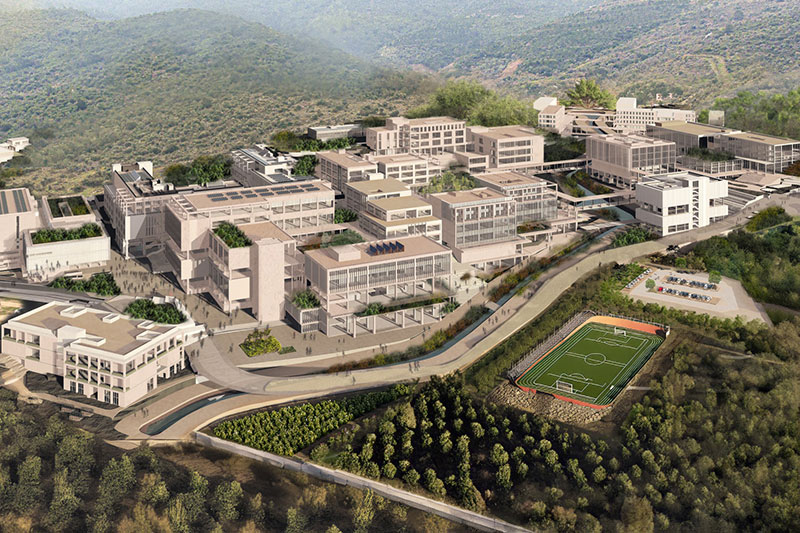
IZMIR UNIVERSITY OF ECONOMICS GÜZELBAHÇE CAMPUS
DetailsGLOBAL CAREER
As Izmir University of Economics transforms into a world-class university, it also raises successful young people with global competence.
More..CONTRIBUTION TO SCIENCE
Izmir University of Economics produces qualified knowledge and competent technologies.
More..VALUING PEOPLE
Izmir University of Economics sees producing social benefit as its reason for existence.
More..
You are one step ahead with your graduate education at Izmir University of Economics.